
EARTHQUAKE AWARENESS
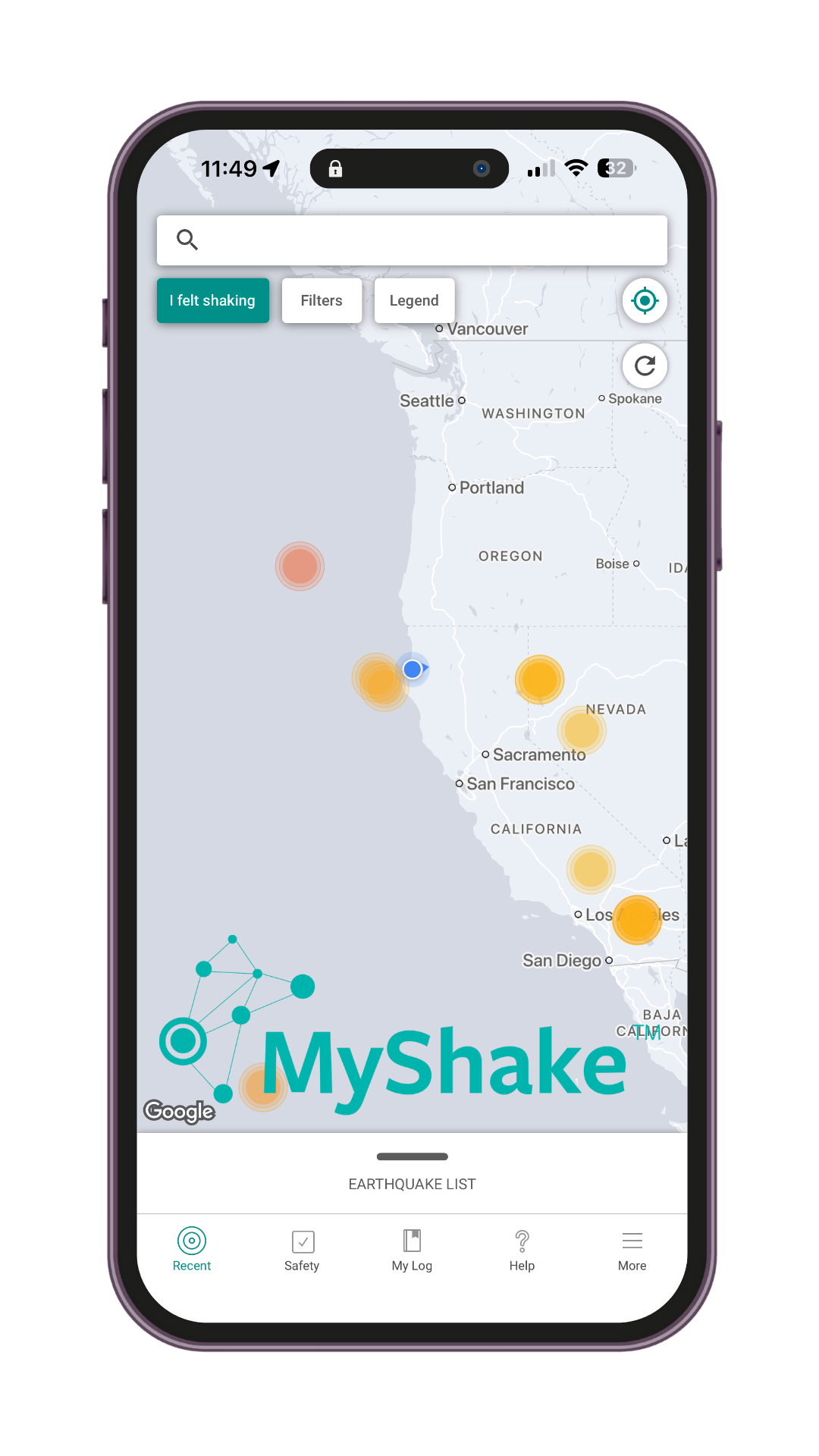


Earthquake Warning App
We recommend all community members download MyShake, the first statewide earthquake early warning system. It is available in English, Spanish, Chinese (Traditional), Tagalog, Korean, and Vietnamese. Users can set a "HomeBase" location to receive alerts for their neighborhood even when location services are off, ensuring that you and your loved ones are notified of nearby threats.
Humboldt County’s public alert and warning system. This is an opt-in system, meaning you must sign up to receive the alert.
Humboldt County’s public alert and warning system. This is an opt-in system, meaning you must sign up to receive the alert.
PREPARE + RECOVER
PREPARE
Before the next big earthquake we recommend these four steps that will make you, your family, or your workplace better prepared to survive and recover quickly:
Step 1:
Secure your space by identifying hazards and securing moveable items.
Step 2:
Plan to be safe by creating your emergency plan and deciding how you will communicate.
Step 3:
Organize emergency supplies in convenient locations.
Step 4:
Minimize financial hardship by organizing important documents, strengthening your property, and considering insurance coverage.
SURVIVE + RECOVER
During the next big earthquake, and immediately after, is when your level of preparedness will make a difference in how you and others survive and can respond to emergencies:
Step 5:
Drop, Cover, and Hold On or other recommended actions such as Lock (wheels), Cover, and Hold On – if you feel shaking or get an alert.
Step 6:
Improve safety after earthquakes by evacuating if necessary, helping the injured, and preventing further injuries or damage.
After the immediate threat of the earthquake has passed, your level of preparedness will determine your quality of life in the weeks and months that follow.
Step 7:
Reconnect and Restore daily life by reuniting with others, repairing damage, and rebuilding community.
GUIDES + PREPAREDNESS
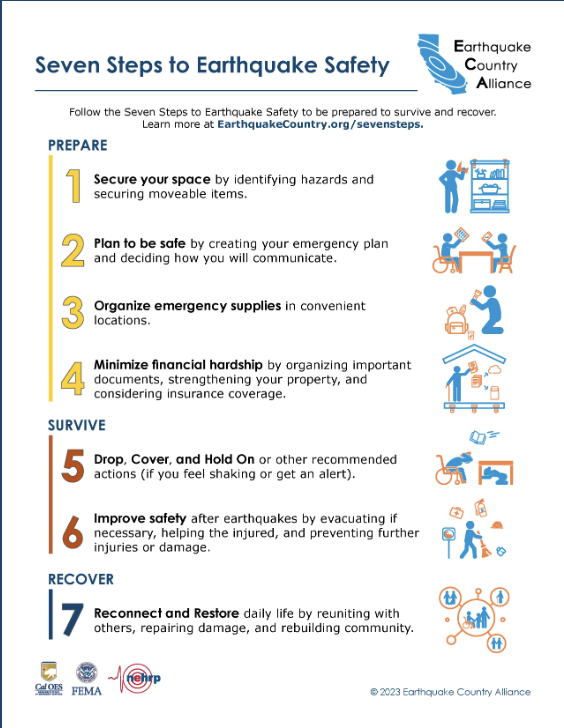
Seven Steps to Earthquake Safety
Preparedness, and mitigation to develop this step-by-step guide for staying safe before, during, and after an earthquake.
Alerts and Warnings Guide
Use the 12 Ways to Prepare to be ready for hazards that may happen suddenly. This is general guidance. Always defer to the alert. Visit to learn more about hazards not included in this guide.
Personal Emergency Plan
Keep your household safe by preparing a personal emergency plan tailored to your needs, location and risks.
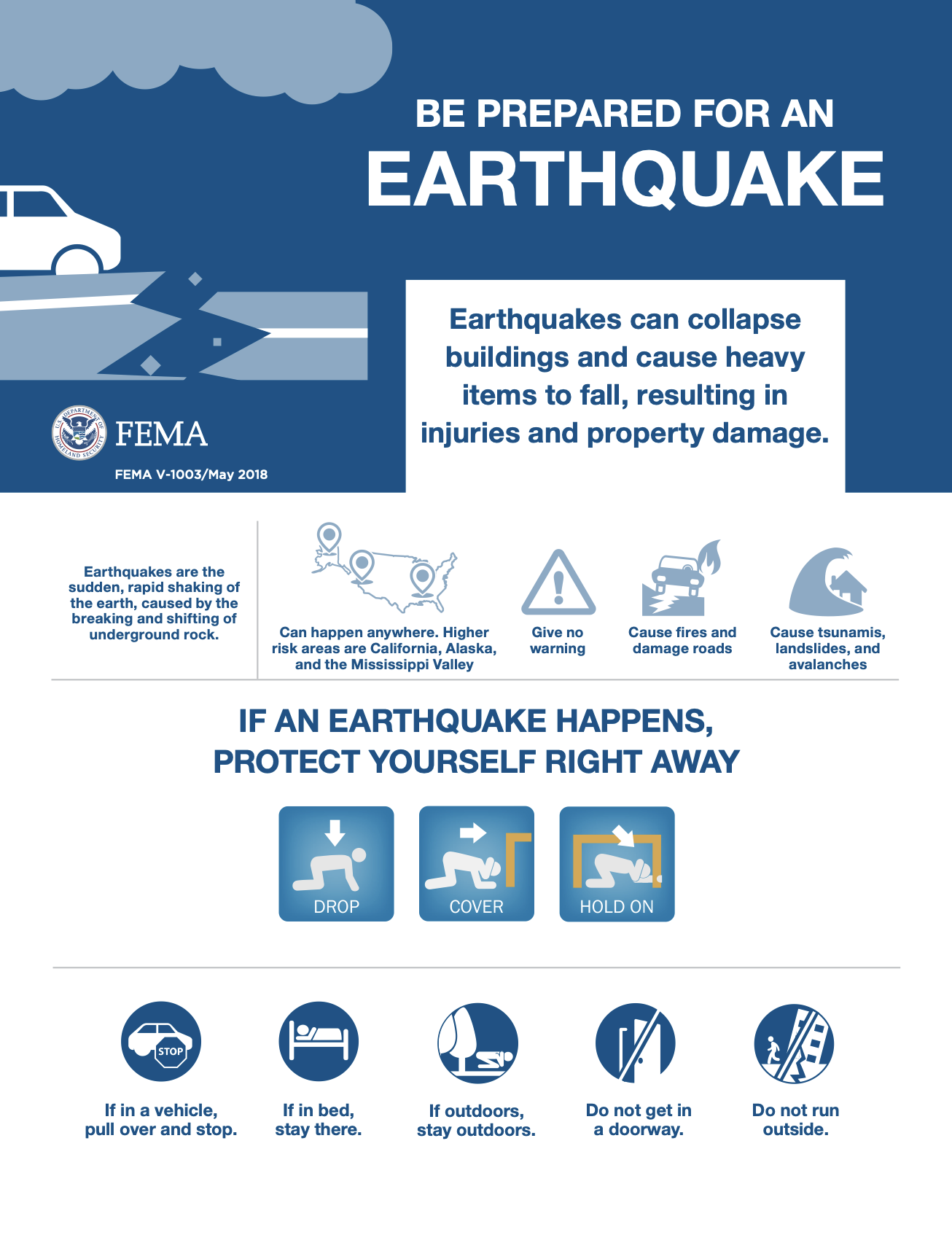
FEMA: Prepare for an Earthquake
A quick reference two page guide focusing on the essential safety steps to take before, during and after an earthquake.
For more information about preparing for an earthquake. Go to
Quick Guide to Safety Before, During, and after Earthquakes
This resource provided by CalOES is a quick reference guide for safety before, during and after an earthquake. Easy to print trifold format.
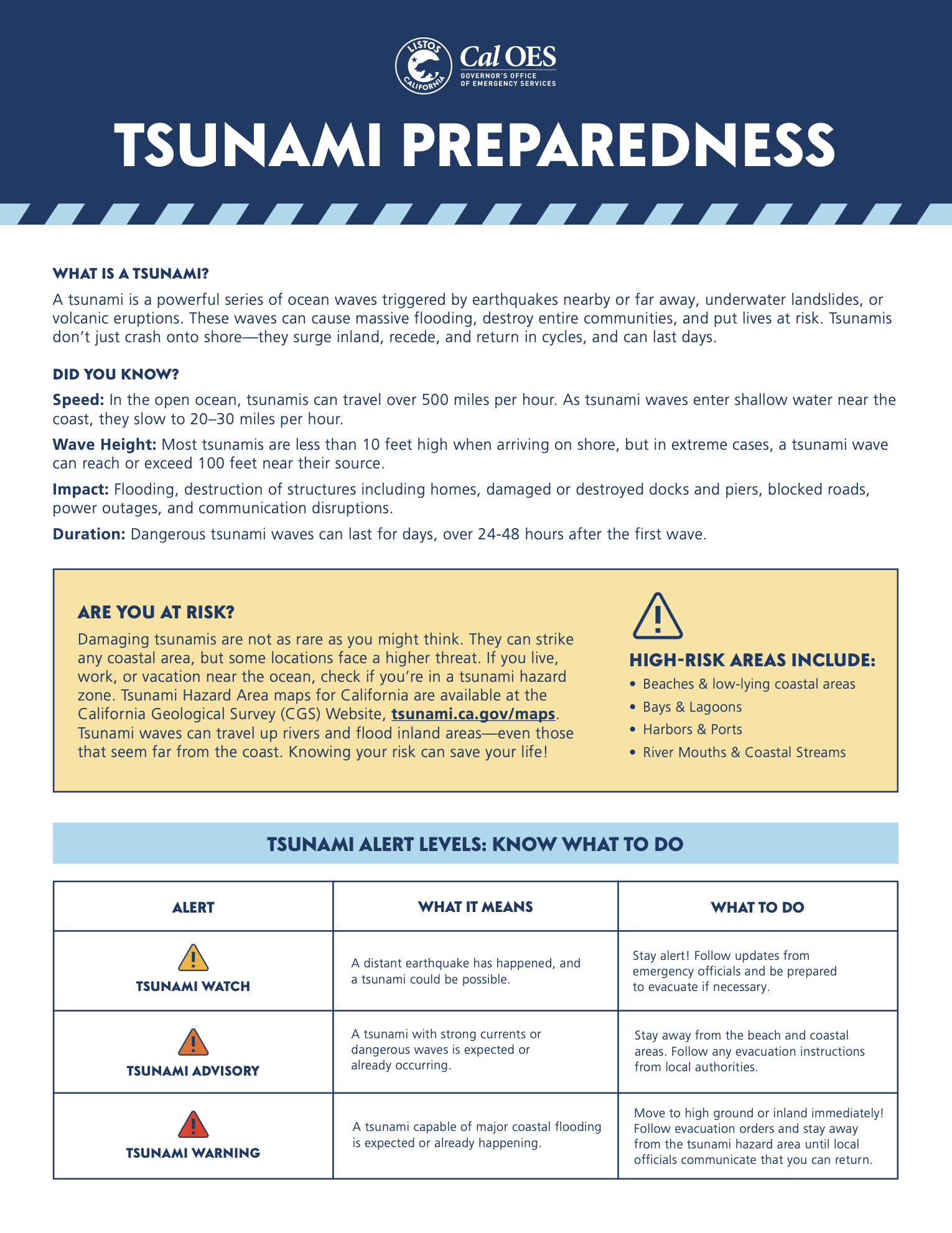
Tsunami Preparedness
A quick reference sheet explaining tsunami alerts levels, basic tsunami information and how to find out where tsunami risk zones are.
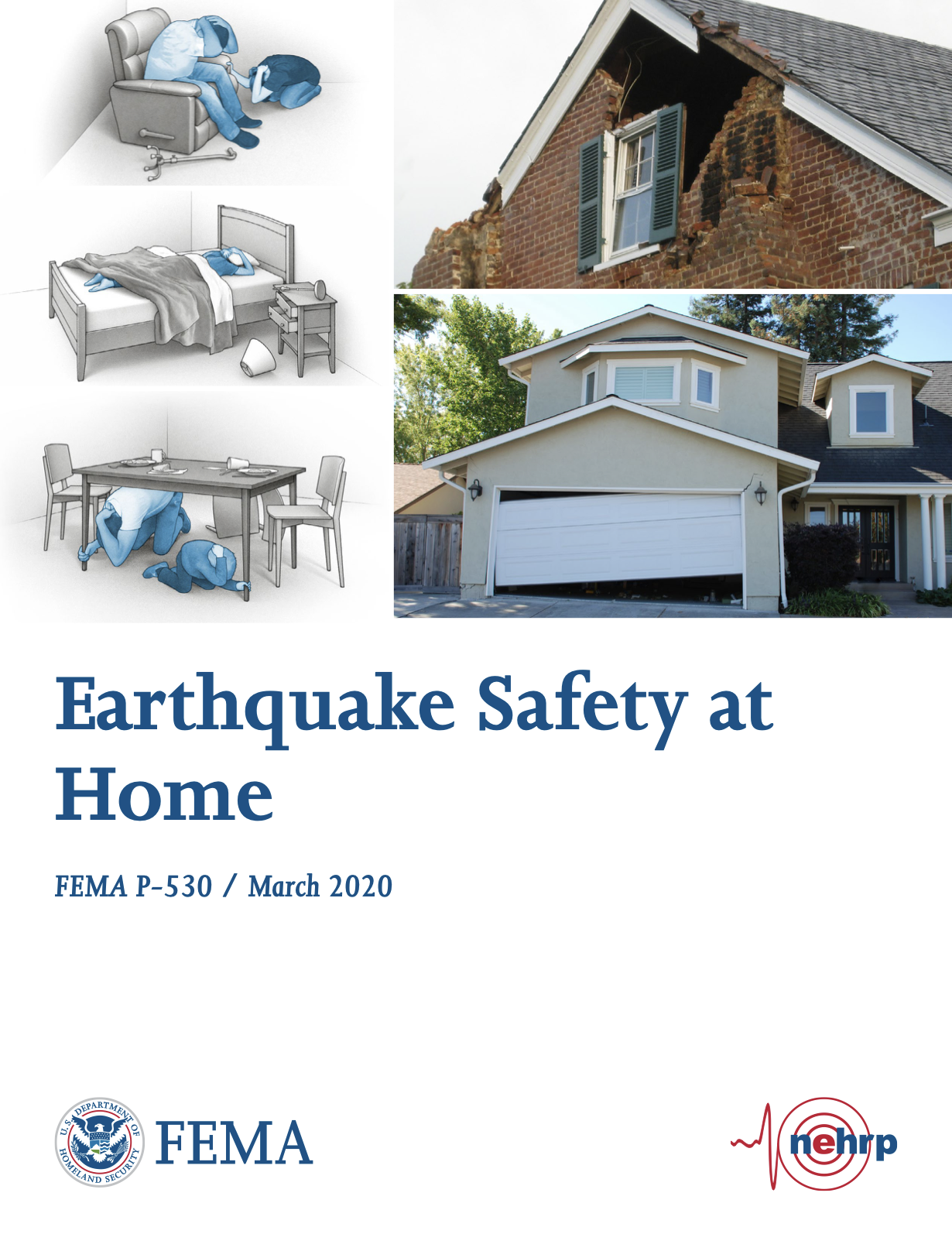
FEMA: Earthquake Safety at Home
This guide will show you why you should care about earthquakes wherever you live, and how you can Prepare, Protect, Survive, Respond, Recover and Repair.
For more information about preparing for an earthquake. Go to
resource links
-
Their "Seven Steps to Earthquake Safety" is the definitive framework. They offer specific guides for people with disabilities (e.g., how to "Drop, Cover, and Hold On" if you use a walker or wheelchair).
-
These are regionally-specific handbooks (available for most of the West Coast and Central US) that explain the science of local faults alongside preparedness tips.
-
This is the best place to link for federal-level resources, including their "QuakeSmart" toolkit, which is specifically designed to help businesses and community organizations (like COAD members) stay resilient.
-
The leading early-warning app that can give seconds of notice before the shaking starts.
-
An interactive, real-time map that users can visit immediately after a quake to see the magnitude and epicenter.
-
Educational videos and animations explaining how earthquake early warning works in the U.S.
-
A collaborative environment for organizations to share earthquake exercise plans and templates.
-
Link here so local schools, businesses, and households can register for the annual drill. They have a massive library of "Drill Broadcast" audio files that can be played over speakers.
Humboldt Office of Emergency Services
Federal Emergency Management Agency (FEMA)

California Office of Emergency Services

NOAA Tsunami Awareness Resources

OSHA Earthquake Safety for Businesses
Occupational Safety & Health Administration
Submitted by Ben Fisher