

disaster awareness
Outsmart Disaster gives you the tools to protect your business. This program helps you protect your business by gaining risk assessment skills and learning how to safeguard your business assets, and keep your employees and the public safe.

Humboldt County’s public alert and warning system. This is an opt-in system, meaning you must sign up to receive the alert.

Genasys (formally known as Zonehaven), is an evacuation management platform. Residents are encouraged to "Know Your Zone" before the next emergency.
PREPARE + RECOVER
Execute Safety Protocols:
Immediately initiate "Drop, Cover, and Hold On" for earthquakes, or move to high ground/assembly points for tsunami or wildfire threats.
Accountability Check:
Conduct a physical headcount of all staff and customers on-site. Initiate your emergency contact tree to verify the safety of off-site employees.
Monitor Local Intel:
Check Humboldt ALERT and your Genasys for important updates and evacuation information. Tune to local "EAS" radio stations.
Utility & Hazard Control:
Only shut off the main gas valve if you smell gas or see damage. If safe, perform a final server backup and power down non-essential electronics to prevent surge damage.
THE FIRST hour
Focus: Life Safety & Stabilization In the immediate wake of a disaster, your priority is people over property. Use this hour to ensure every person on-site is safe, account for your team, and take rapid steps to prevent further damage to your facility.
24–48 Hours
Focus: Communication & Recovery Once the scene is stable, the shift moves to business survival and community support. Use this window to document damage, update your customers, and begin the formal reporting process.
Document Everything:
Take extensive photos and video of all physical damage to the structure and inventory before starting any cleanup.
Report Damage:
Log your impacts on the Humboldt OES Recover Portal, or whatever agency responders direct you to, to help the county qualify for state and federal disaster aid.
External Communication:
Update your website, social media, and Google Business Profile with your status (Open/Closed/Modified Hours).
Initiate Continuity Plan:
Contact your insurance agent to start the claims process and reach out to key suppliers to pause or redirect deliveries.
Employee Support:
Provide staff with clear updates on payroll; direct displaced workers to the EDD Disaster Unemployment portal.
Coordinate with COAD & SBDC:
Contact the Humboldt COAD to plug into the nonprofit recovery network and the North Coast SBDC for help with SBA loan applications.
Review Financial Records:
Cross-reference damage photos with inventory lists and start a dedicated log of all disaster-related expenses for insurance or tax claims.
Pivot to Mutual Aid:
If your business is operational, coordinate with the COAD before donating goods or services. Deferring to coordinating bodies ensures your support reaches the areas of greatest need without overwhelming local logistics.
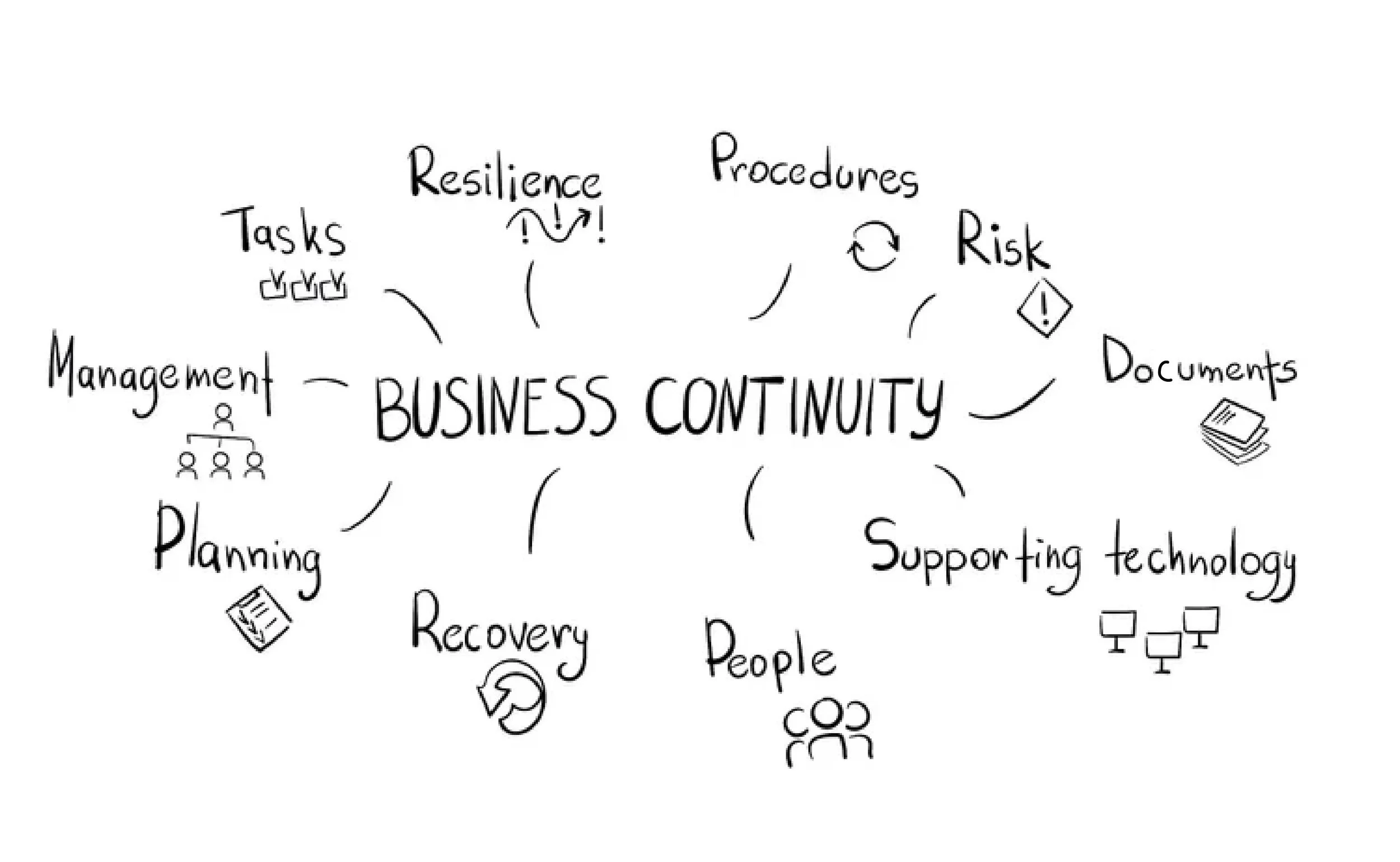
A Business Continuity Plan (BCP) While emergency response focuses on immediate life safety (getting people out), business continuity focuses on resilience - ensuring you have a strategy to serve customers, pay employees, and protect your livelihood as soon as possible after disaster.
resource links
NATIONAL + FEDERAL
-
The primary link for low-interest federal disaster loans.
-
Sector-specific guides (e.g., retail, manufacturing, warehouse).
-
A streamlined planning tool for small businesses.
https://preparecenter.org/resource/ofb-ez-open-for-business-ez/
-
A self-assessment tool to see how prepared your business actually is.
-
Information on tax relief and filing extensions after a disaster.
-
California’s primary business resiliency campaign.
-
Disaster relief and grant info for CA small businesses.
-
Tool for discovering specific local risks (fire, flood, quake).
-
Help for businesses navigating commercial claims after a disaster.
-
Comprehensive state-level recovery resources.
-
Comprehensive state-level recovery resources.
-
Critical for Humboldt’s many restaurants and food producers.
-
Defensible space guidelines specifically for commercial properties.
-
Crucial for PSPS (Public Safety Power Shutoff) planning.
https://www.pge.com/en_US/safety/emergency-preparedness/emergency-preparedness.page
-
For businesses managing hazardous materials or cleanup.
-
The source for local emergency declarations.
-
(Essential) Local experts who provide free help with SBA disaster loan applications.
-
Information on microgrids and local energy backup options for businesses looking to stay powered during PSPS events or grid failures.
-
Key for the "After" phase regarding disaster debris removal, hazardous material disposal, and commercial waste protocols after a flood or fire.
LOOP
Humboldt Office of Emergency Services

Internal Revenue Service (IRS)

California Office of Emergency Services

National Small Business Administration
The Humboldt Perspective
In our region, continuity often means planning for isolation. Whether it’s a road closure on the 101 or a multi-day power outage, a good BCP ensures your business doesn't just survive the event, but leads the recovery.
GUIDES + PREPAREDNESS
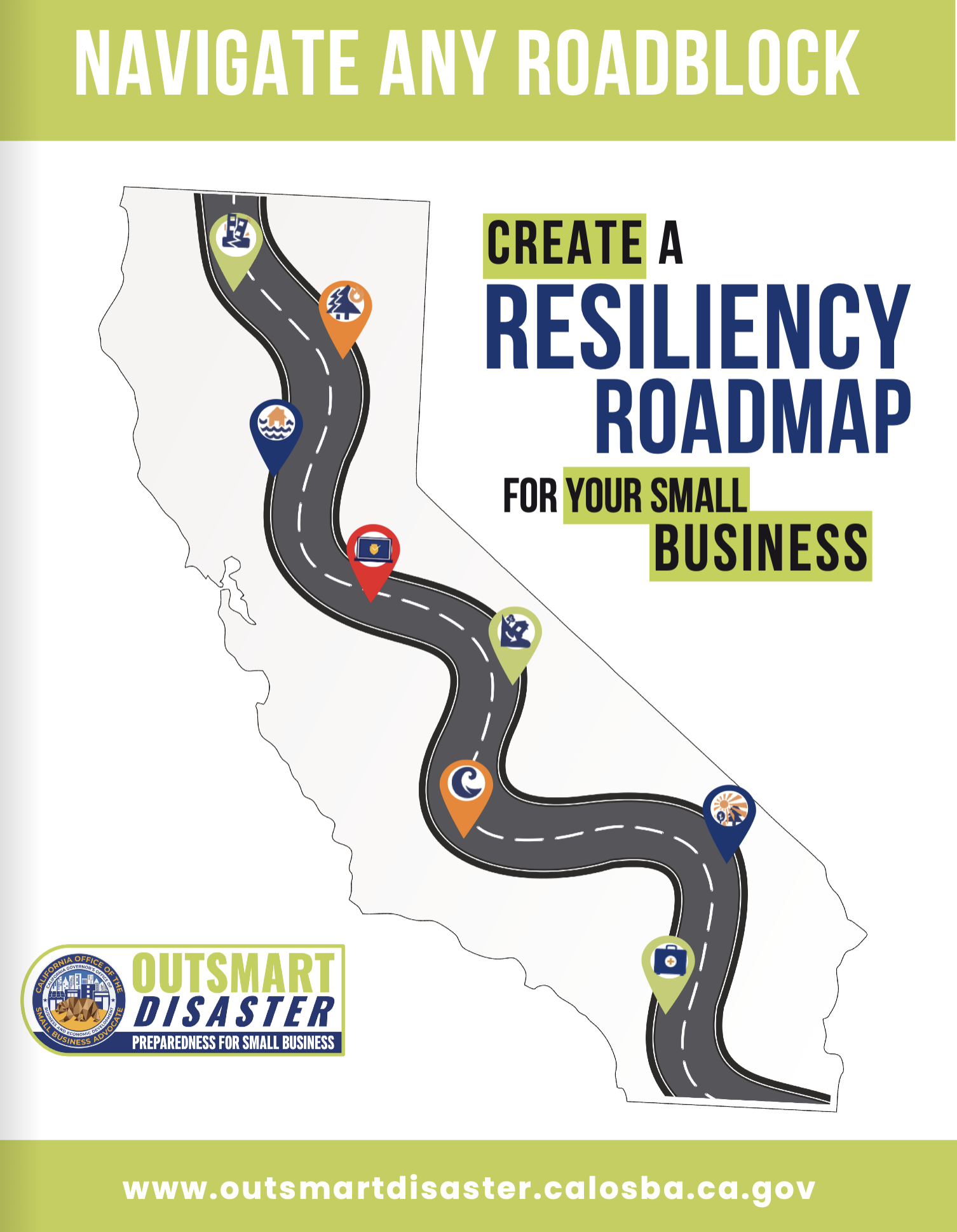
The Resiliency Roadmap
The Focus: California-Specific Business Continuity.
Why: This is the state’s primary guide for small business owners. It provides a "Resiliency Roadmap" and electronic fillable forms to help you map out your specific risks and operations.
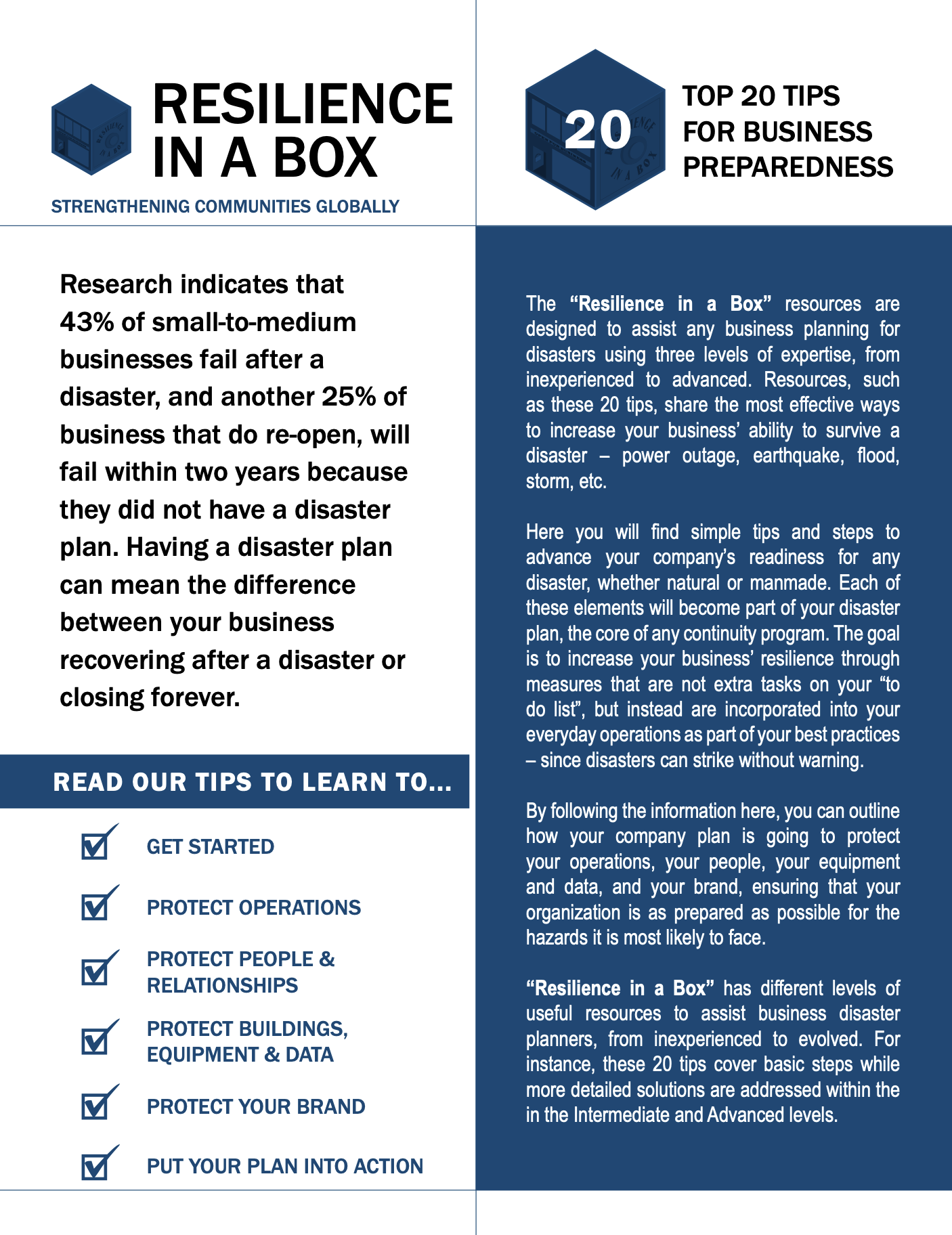
Resiliency in a Box: Top 20 Tips
The Focus: Here are simple tips and steps to advance your company’s readiness for any disaster, whether natural or manmade.
Why: Increase your business’ resilience through measures that are not extra tasks on your “to-do list”, but instead are incorporated into your everyday operations as part of your best practices.
Resilience 101 WorkbookThe
Focus: The Resilience in a Box workbook guides companies toward addressing preparedness issues while building in flexibility to handle potential business interruptions.
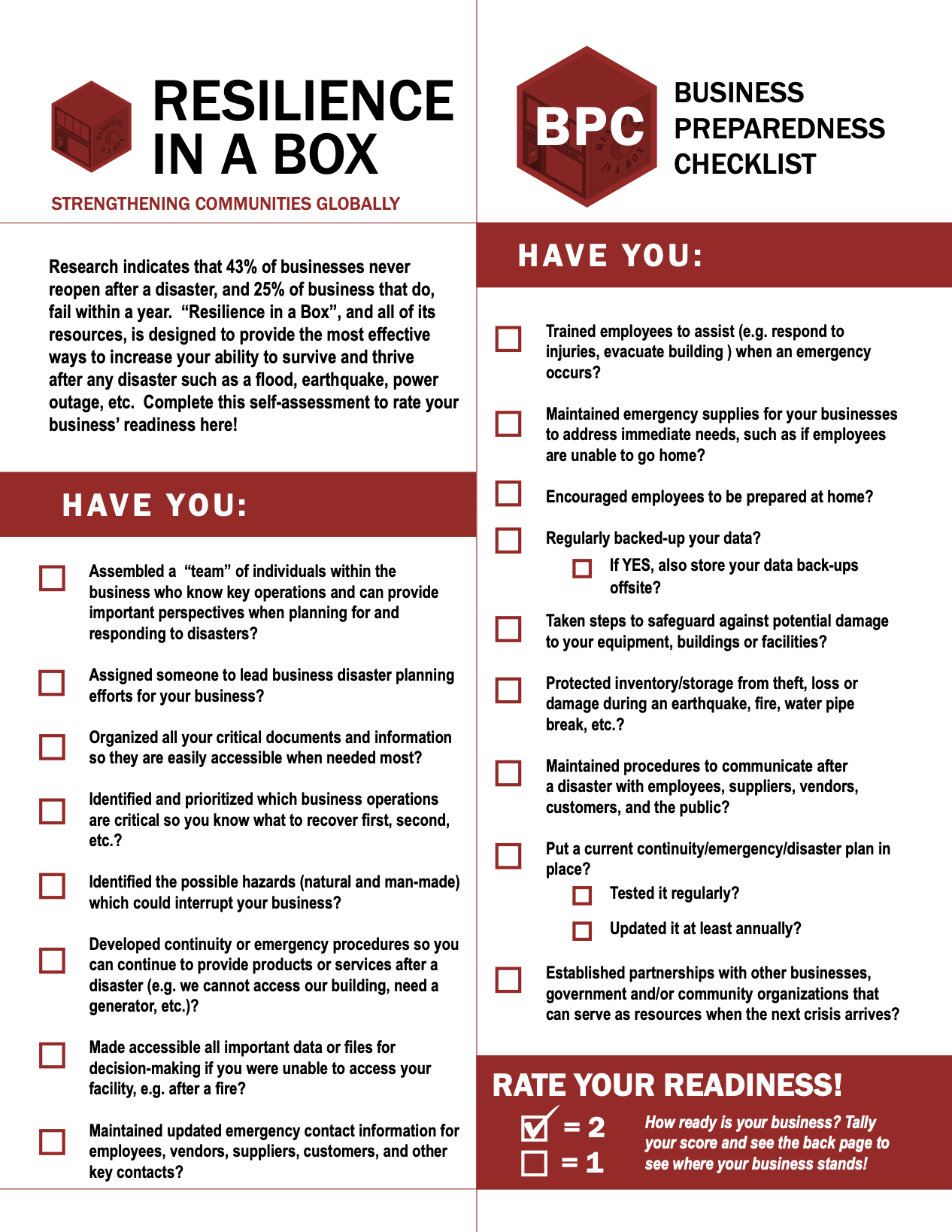
Resiliency in a Box: Checklist
The Focus: Resilience in a Box is designed to provide the most effective ways to increase your ability to survive and thrive after any disaster such as a flood, earthquake, power outage, etc.
Why: Complete this self-assessment checklist to rate your business’ readiness.
QuakeSmart Toolkit
The Focus: Physical Asset & Inventory Protection.
Why: Focuses on "Mitigation" - the physical steps you can take today to prevent inventory from being destroyed & employees from being injured by falling objects during a quake.
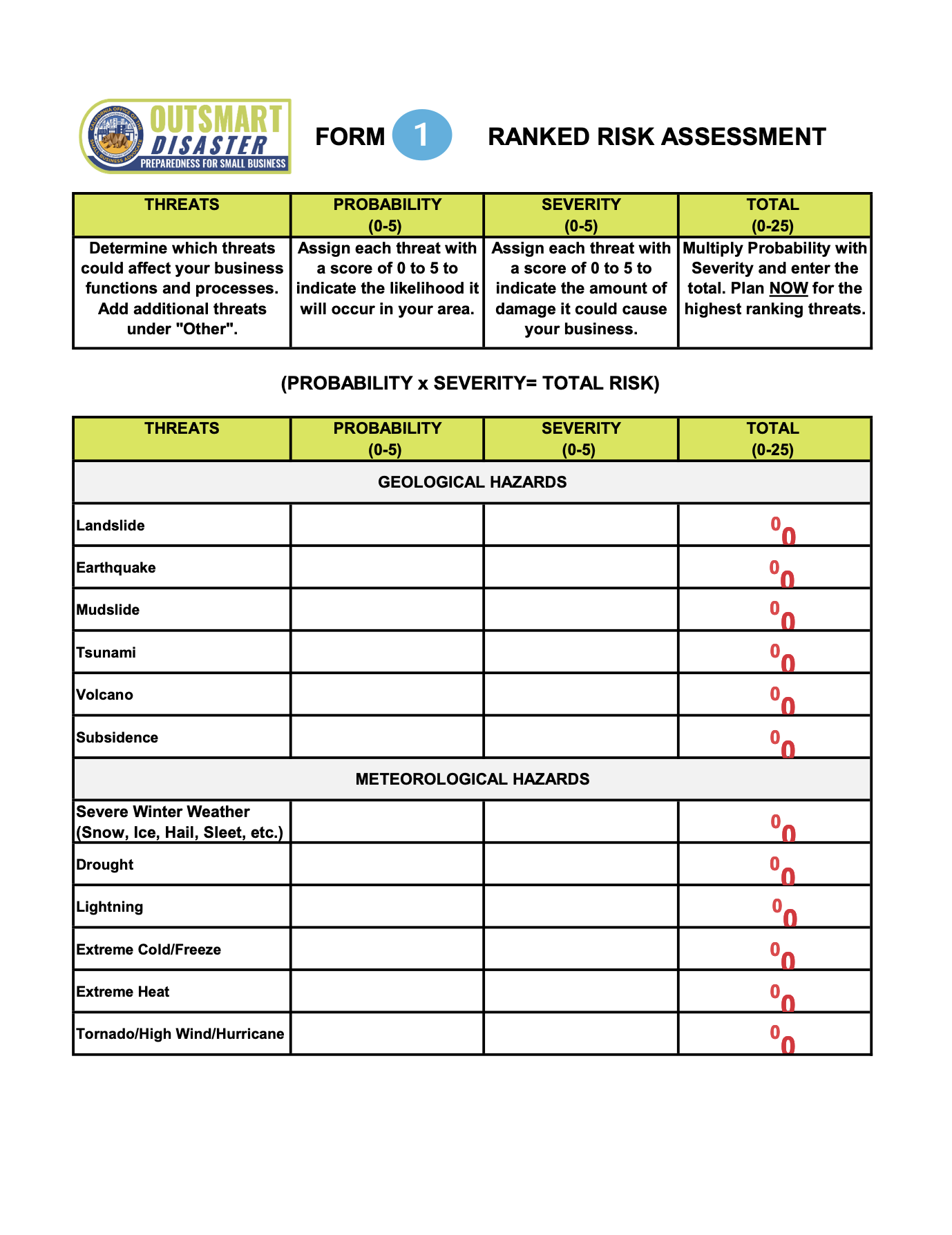
Outsmart Disaster Forms
The Focus: Actionable worksheets and data collection templates.
Why: Essential templates for risk assessments, employee emergency contact trees, and critical equipment inventories to ensure all your vital data is organized in one place
Power Outage Toolkit
The Focus: Preparedness and Mitigation Project Plan to take action to protect employees, protect customers, and help ensure business continuity as well.
Why: Over 70% of businesses in the US experience a power outage every year.
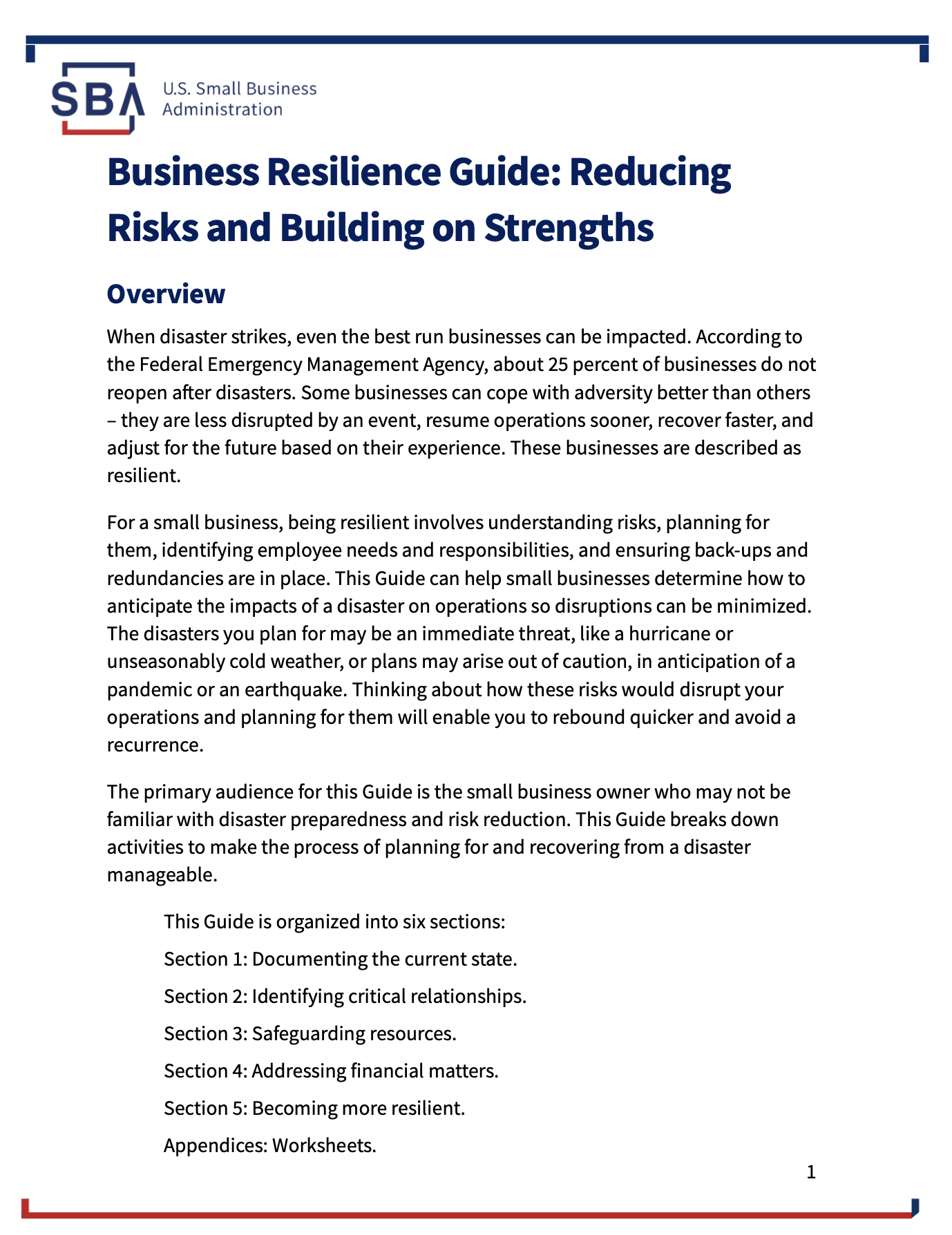
SBA Disaster Preparedness & Recovery Guide
The Focus: Financial Survival & Disaster Loans.
Why: The financial side of recovery, including how to document economic injury and the steps required to apply for low-interest federal disaster loans.